AI Tools Are Transforming Physician Training: Penn Medicine Leads the Charge

In a groundbreaking shift within the medical education landscape, Penn Medicine has begun integrating advanced AI tools into its physician training programs, heralding a new era of personalized education for future healthcare providers. This initiative aims to enhance the learning experience, improve diagnostic accuracy, and ultimately, elevate patient care.
Background/Context
The urgency for innovative training methods in healthcare has never been more critical. As the healthcare industry grapples with increasing patient loads, a shortage of qualified physicians, and the rapid evolution of medical knowledge, traditional training methods are struggling to keep pace. The utilization of artificial intelligence in physician training not only addresses these challenges but also prepares new doctors for a technology-driven future. With Penn Medicine at the forefront, this initiative reflects a larger trend of AI integration into various facets of healthcare.
Key Developments
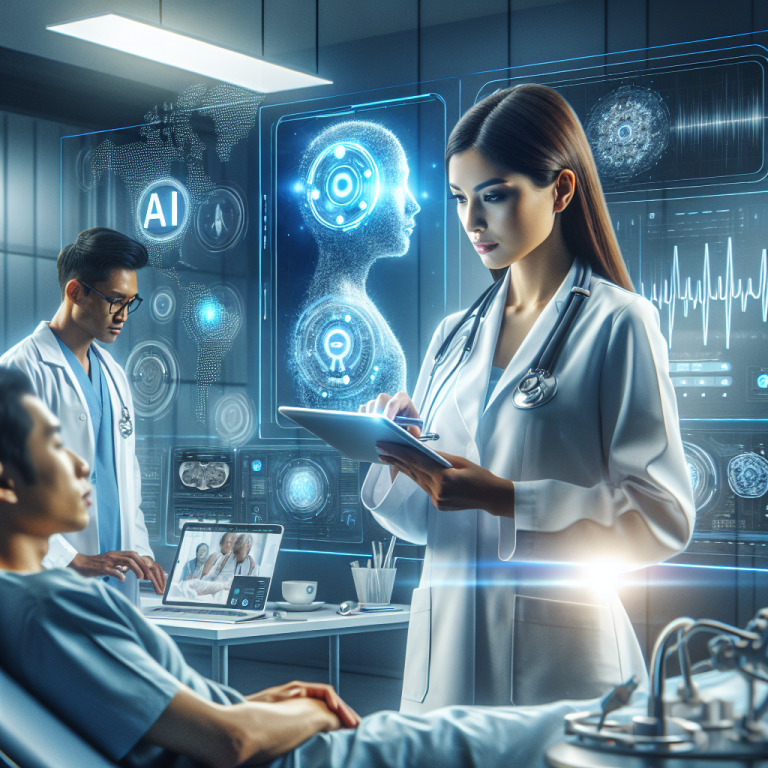
Penn Medicine’s adoption of AI for physician training includes several pioneering tools designed to simulate real-world scenarios. One of the standout features is the incorporation of virtual patients, which allow students to practice diagnosis and treatment in a risk-free environment. According to Dr. Laura McLeod, a leading educator at Penn Medicine, “These AI-driven simulations provide an unprecedented level of interaction, helping students refine their clinical skills without the pressures of real-life situations.”
In addition, AI algorithms are being used to analyze students’ performance, offering tailored feedback to help each learner improve. “This technology identifies specific areas for development, allowing us to build personalized training programs,” said Dr. Samuel Rizzo, Director of Medical Education at Penn Medicine. “As a result, each physician trainee can progress at their own pace.”
- Enhanced diagnostic skills through virtual patient simulations
- Personalized learning based on performance analytics
- Incorporation of up-to-date medical knowledge through AI
- Improved engagement and retention through interactive learning
Impact Analysis
The introduction of AI tools in physician training has profound implications, particularly for international students pursuing medical education. As healthcare systems worldwide become increasingly interconnected and technology-driven, the ability to harness these tools can be a significant advantage. For international students, proficiency in AI-supported methodologies could enhance employability and provide a competitive edge in both domestic and global job markets.
Moreover, the flexibility offered by AI-enhanced training could make medical education more accessible. With remote access to simulation tools, students can learn from anywhere, facilitating a more inclusive learning environment. As Dr. Rizzo notes, “Our goal is to ensure that aspiring physicians from all backgrounds have the opportunity to excel, regardless of their geographical location.”
Expert Insights/Tips
For students looking to strengthen their candidacy for medical programs, familiarity with AI and technology in healthcare can be beneficial. Here are some practical tips to consider:
- Engage with technology: Familiarize yourself with basic AI concepts and how they apply in healthcare settings.
- Participate in workshops: Seek out opportunities that allow you to engage with AI tools, whether through academic institutions or online courses.
- Network with professionals: Connect with current medical professionals who are utilizing AI in their practices to gain firsthand insights.
- Stay informed: Follow advancements in medical training technologies through journals, newsletters, and forums.
Looking Ahead
The introduction of AI tools in physician training is just the beginning. As this trend gains traction, we can expect further enhancements in curriculum development tethered to technological advancements. Future iterations of these programs may involve even more sophisticated simulations and real-time data analysis to improve learning outcomes. Additionally, as more institutions implement AI in training, standardized curricula may emerge, promoting consistency in education across regions.
Transitioning to an AI-supported educational framework brings with it the exciting prospect of redefining the future of medical training. This may not only enhance the skills of physicians but also lay the groundwork for a more adaptive and responsive healthcare system. “The future of medicine is here, and it’s about being prepared,” emphasized Dr. McLeod.
As AI tools continue to evolve, the need for constant adaptation in educational methods will be crucial for any aspiring medical professional.
Reach out to us for personalized consultation based on your specific requirements.